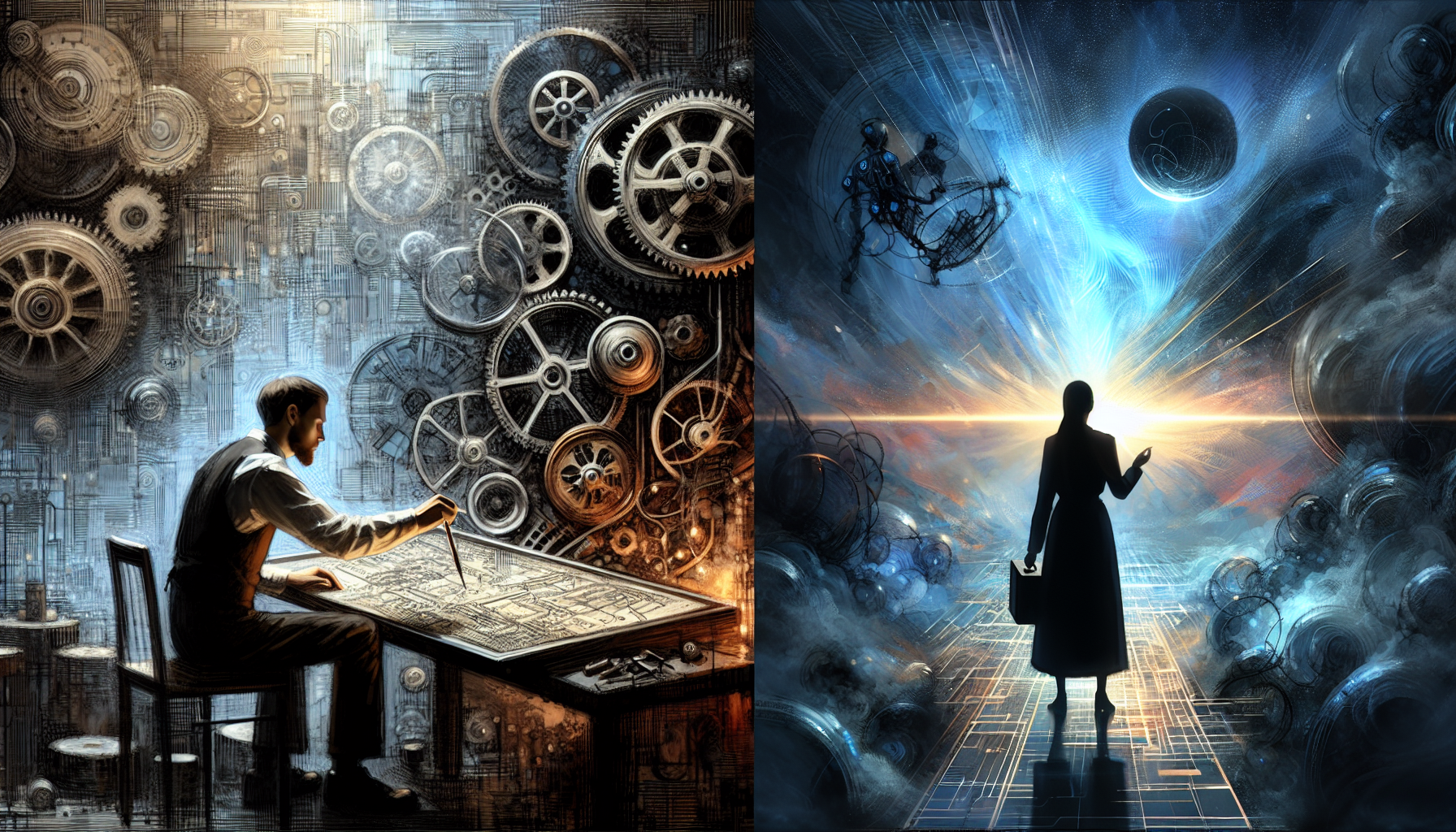
The debate about AI and software development has largely split into two camps. Both have a point. Both are missing something critical.
Understanding where each one goes wrong might be the most useful thing you can take from this moment in the industry.
Camp one: the detail-oriented developer.
These are the people who have spent years — sometimes decades — honing their craft. They know the syntax. They know the best practices. They stay current with language updates, security vulnerabilities, performance considerations. They take real pride in the fact that software development is genuinely hard, that the ability to communicate with computers through code places them in a small and capable minority.
They look at the current AI moment and see a lot of what I'd have to agree is real: reckless vibe-coding, applications built by people who don't understand what they're building, security holes nobody thought to consider, and a general delusion that talking to an AI is the same as knowing how to build software. They see a bubble. They expect it to pop. And they're quietly confident that when it does, they'll be the ones called in to clean up the mess.
The blind spot: they're measuring the future by the standards of the past.
As models continue to improve, the specific knowledge of syntax, the memorization of language quirks, the manual work of staying current with every update — these things matter less with every generation of tools. Not because the underlying concepts don't matter, but because AI is increasingly handling that layer. The developer who wins in ten years won't be the one who can write the cleanest code from memory. It'll be the one who can think most clearly about systems, communicate most precisely about requirements, and direct AI tools with enough understanding to get real results.
The craft is being abstracted. What's left underneath is the thinking — and that part is more valuable than ever.
Camp two: the vibe coder.
On the other side are the big-picture thinkers — the marketers, the entrepreneurs, the idea people who always had more vision than technical skill. For them, AI feels like the answer to a lifelong frustration. All those ideas they could never build because they couldn't write the code. All those products and solutions stuck in their heads because the technical barrier was too high. Now, finally, they can just describe what they want.
And honestly? There's something real here too. The democratization of building is happening. People who never would have touched a codebase are now creating things that work. That's not nothing.
The blind spot: understanding software is still not optional.
You can describe a house in perfect detail to the world's best architect and still end up with something unlivable if you don't understand the basics of how houses work. The same is true here. AI can write the code, but you still have to understand what good software looks like, how systems interact, what makes something secure or brittle, when the output is right and when it only looks right. The heavy lifting hasn't disappeared — it's shifted. And if you don't know enough to recognize when the AI has made a mistake, you'll ship the mistake.
The magic is real. The shortcut isn't.
On the bubble.
Yes, there's an AI bubble. Yes, it will pop — or at least deflate. Enormous amounts of money are chasing timelines that won't hold, and when the gap between promise and delivery becomes undeniable, there will be a correction.
But here's what I think matters: the bubble isn't evidence that AI isn't real. It's evidence that money found something real and, as money tends to do, overclaimed it. The exaggeration is in service of funding, momentum, and profit — not a sign that the underlying technology is smoke.
The potential survives the bubble. It always has. The internet bubble didn't mean the internet wasn't coming. It just meant the timeline was wrong and a lot of people were going to lose money before the thing it was pointing at actually arrived.
What both sides are actually getting wrong.
The detail-oriented coder is still looking at software development through the lens of who can write the best code. That's the wrong scoreboard.
The vibe coder is being lulled into thinking you can speak great software into existence without understanding what you're building. That's the wrong expectation.
The developer who navigates this moment well is the one who takes the best of both: deep enough understanding of systems and software to direct AI with precision, and enough big-picture thinking to see what's actually worth building. The syntax matters less. The thinking matters more than it ever has.
That's a different skill set than the one the industry has been rewarding. But it's the one the next decade will require.